The Flash
HIGH-SPEED VACUUM TRANSPORT (CONCEPT)
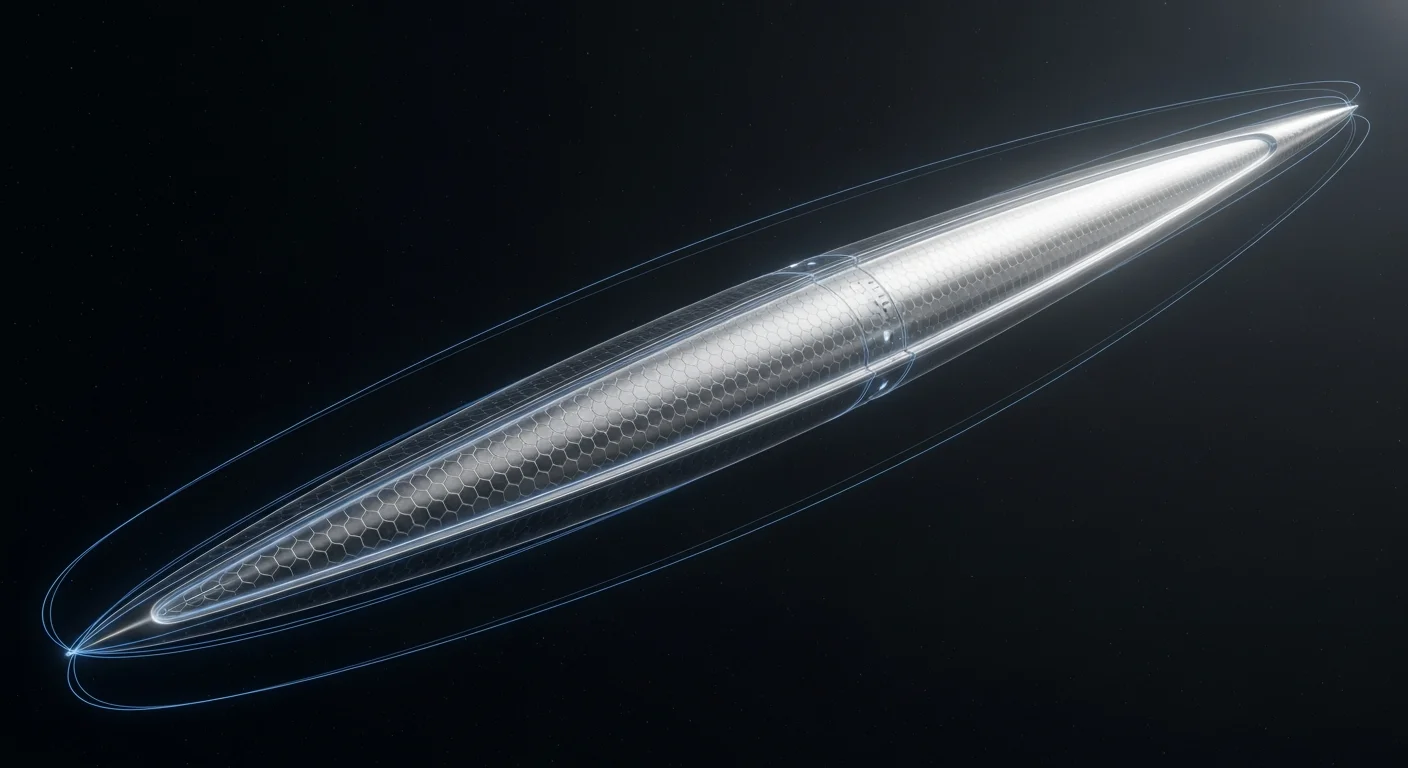
FIG 5.0: FLASH VEHICLE CONCEPT — VACUUM TUBE MAGLEV
The Flash extends H-LEV maglev technology into evacuated tube infrastructure. Three development phases, each requiring progressively harder engineering.
PHASE 1 — SUBSONIC (MACH 0.8)
~1,000 km/h — Near-Term Feasible
Atmospheric H-LEV in a partially evacuated tube. Comparable to existing hyperloop concepts. Standard passenger comfort (0.1G lateral). Achievable with current superconducting technology and civil engineering. NY → Washington: ~22 minutes. This is the entry point—proven physics, known engineering constraints.
PHASE 2 — SUPERSONIC (MACH 3)
~3,700 km/h — Hard Vacuum Required
Requires near-perfect vacuum (below 1 Pa) maintained across hundreds of kilometers of tube. Thermal management becomes the primary constraint: aerodynamic heating at residual gas pressure, pod skin temperature, and cryostat insulation from the warm tube wall. Linear synchronous motor propulsion with regenerative braking (85% energy recovery). NY → London (undersea): ~90 minutes. This phase requires infrastructure investment comparable to a continental railway.
PHASE 3 — HYPERSONIC (RESEARCH TARGET)
Beyond Mach 3 — Theoretical Study
Speeds above Mach 3 in a tube introduce engineering challenges that remain unsolved: centrifugal forces on curved Earth trajectories, emergency braking distances measured in hundreds of kilometers, tube structural integrity under thermal cycling, and power delivery at GW scale. Phase 3 exists as a design study to identify which constraints are fundamental and which are engineering problems. No timeline is attached to this phase.
| ROUTE | DISTANCE | AIRLINE | PHASE 1 | PHASE 2 |
|---|---|---|---|---|
| NY → Washington | 360 km | 1 hr | 22 min | 8 min |
| NY → London | 5,500 km | 7 hr | 5 hr 30 min | 1 hr 30 min |
| LA → Tokyo | 8,800 km | 11 hr | 8 hr 48 min | 2 hr 23 min |